Coursebox provides a flexible and scalable roles system designed to support different levels of access and responsibility across both the standard Coursebox Platform (my.coursebox.ai) and White Label portals (client-branded versions). Understanding these roles is essential for effective governance, secure user management, and smooth collaboration.
This guide explains the purpose and permissions of each role—from Super Admins who hold the highest authority, to Learners who engage with assigned courses only. It also highlights key differences between the standard platform and white-label environments, outlines admin caps based on licensing, and offers example scenarios to help you apply role management effectively in practice.
Note: 'Invite 'Collaborator' in some portals means enable another user to collaborate and edit a course.
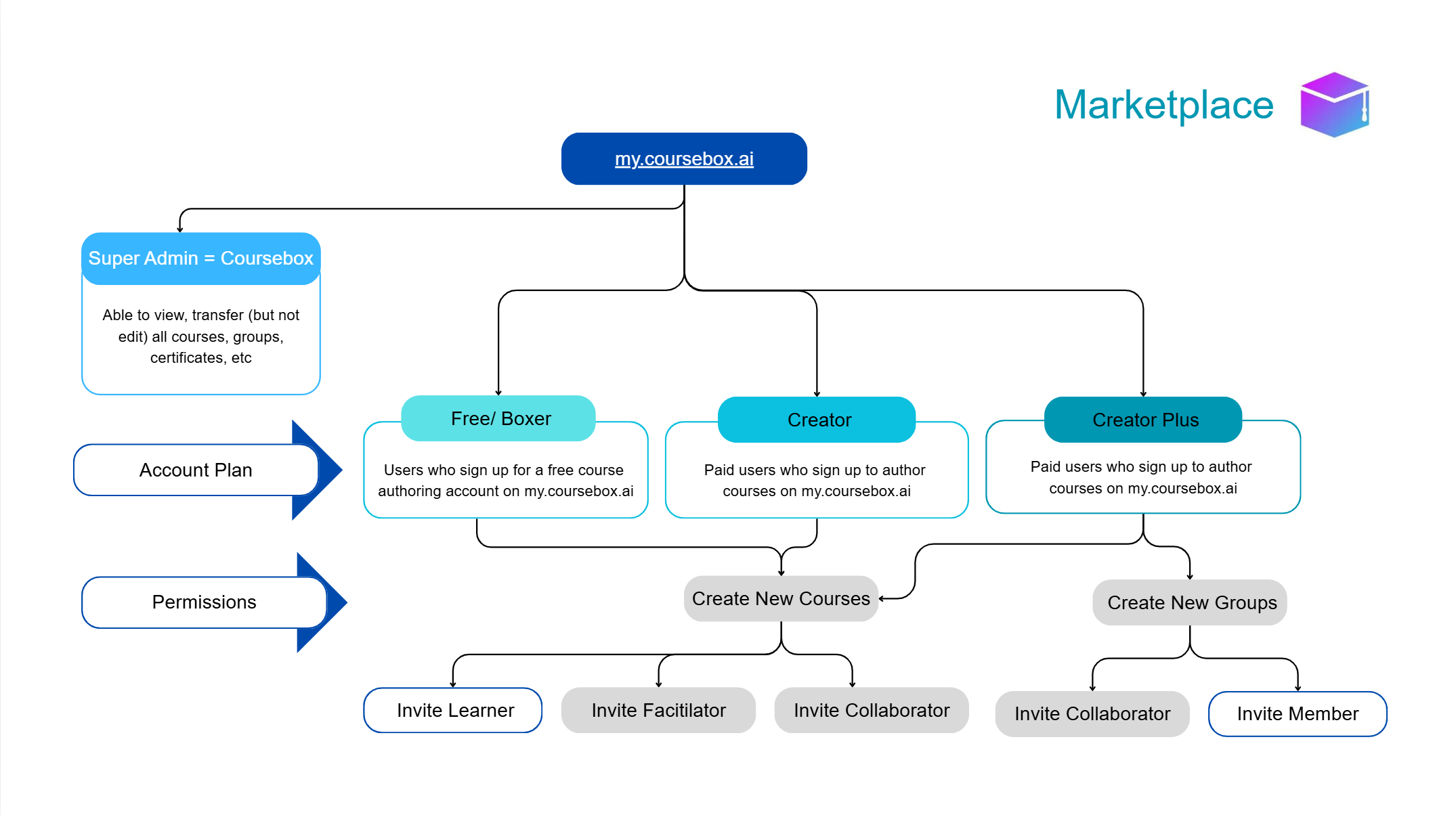
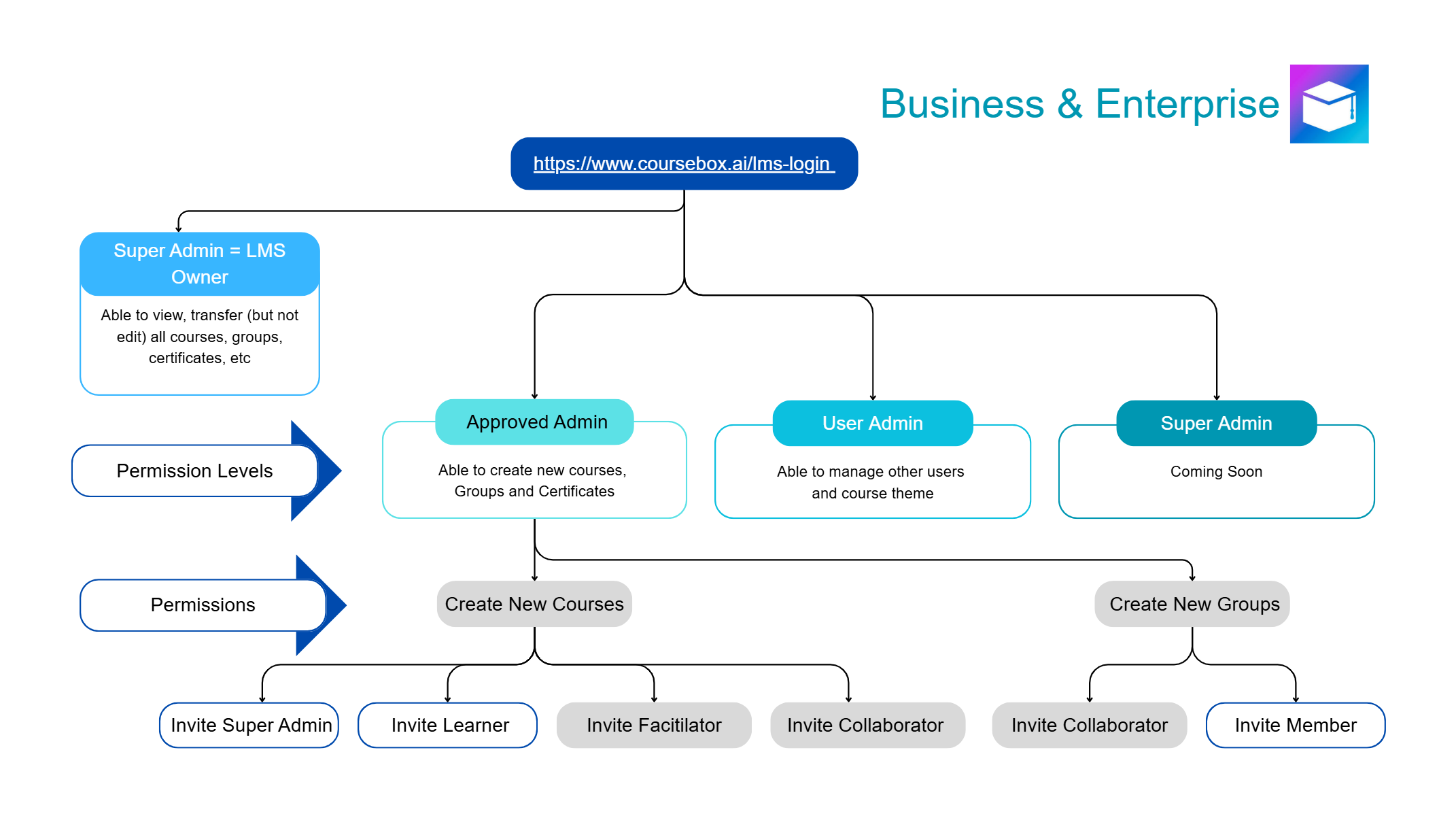
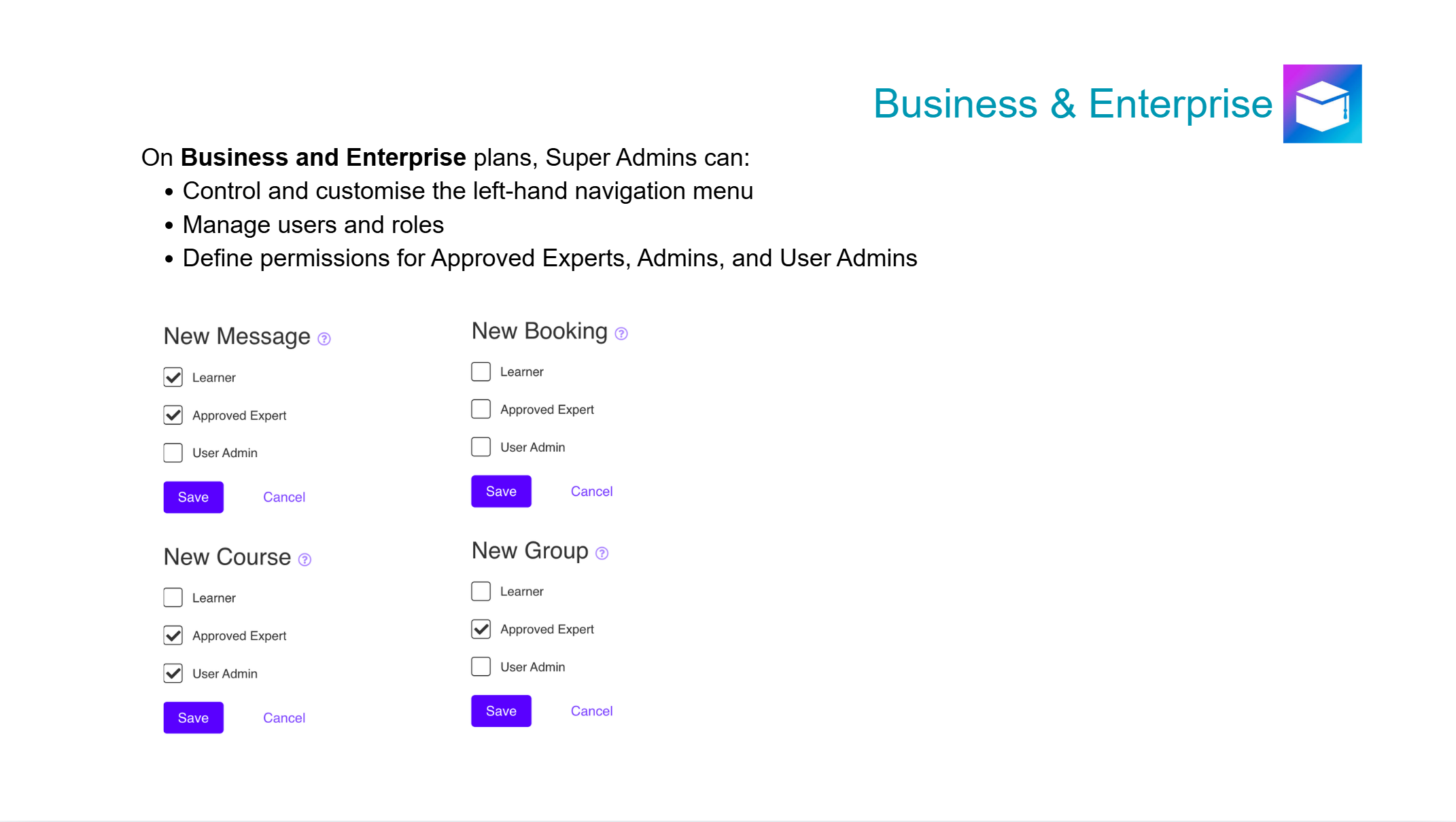
Coursebox Roles & Permissions: Marketplace vs. White Label
Coursebox enables flexible user management through a robust roles system, tailored for both:
Marketplace (
my.coursebox.ai)White Label Installations (client-branded portals)
This article explains the distinctions and details each user role, including the User Admin function.
Marketplace vs. White Label Differences
| Feature | my.coursebox.ai | White Label Portal |
|---|---|---|
| Super Admin | Travis Clapp | Client-appointed |
| User Admin Available? | Yes | Yes |
| Admin/Creator Cap | Managed by Coursebox | 10 (Standard) / 50 (Enterprise) |
| Portal Branding Control | Super Admin/User Admin | Super Admin/User Admin |
| Course Editing | Admins, Creators, Super Admin | Admins, Creators, Super Admin |
Portal-Level Roles
These roles control users, branding, and overall portal management.
A. Super Admin
What it is: The highest authority in the system.
- In the Marketplace: Coursebox internal owner (e.g., Travis).
- In White Label: The client’s primary portal owner.
Permissions:
- Full access to all settings and data
- Can specify any user's status/role, up to the allowed cap for admin roles
- Can assign User Admin status, Creators, Facilitators, and Learners
Admin Cap:
- Marketplace: Controlled by Coursebox
- White Label:
- 10 Admins (Standard plan)
- 50 Admins (Enterprise plan)
- Facilitators and Learners do NOT count toward this cap
B. User Admin
What it is: Special admin type who can manage the portal’s user list and visual/theme settings, but may have limited access to course content. Sits below Super Admin, but above standard Admin in some administrative respects
Permissions:
Manage and invite users (Collaborators, Facilitators, Learners)
Modify portal branding and theme
View user lists and status
Limitations
Cannot edit or author course content unless also assigned as a Creator/Admin
C. Approved Admin (In the Marketplace this is known as Creator)
What it is: Course author/editor with permission to create, edit, and manage courses and groups
Permissions:
Create and edit courses
- Manage course structure and content
- Invite other Admins (within admin cap)
- Invite Facilitators to support with grading and learner progress
- Manage course groups
Limitations
Cannot change high-level portal settings (unless also Super Admin)
D. Learner
What it is: End-user enrolled in courses
Permissions:
- Access assigned courses only
- Complete activities and assessments
- View personal reports
- Receive certificates, badges, and points
Limitations
No admin, editing, or reporting privileges
Portal Level Roles - Comparison Table
| Role | Manage Users | Edit Courses | Grade/ Moderate | Manage Theme | Assign Roles | Cap-Limited? |
| Super Admin | Yes | Yes | Yes | Yes | Yes (all roles) | Yes (admin cap applies) |
| User Admin | Yes | No* | No | Yes | Yes (except Super Admin) | Yes |
| Approved Admin (Creator in Marketplace) | No | Yes | No* | No | Yes ( Invite Facilitators & Collaborators within courses) | Yes |
| Learner | No | No | No | No | No | No |
*Can edit courses or grade only if also assigned Creator/Admin or Facilitator permissions.
Course-Level Roles
Within a Course, a Approved Admin/Creator is able to enroll learners and then can also update their role within that course. The three options are as follows:
1. Learner (Enrolled)
What it is: A standard enrolled learner/participant.
Permissions:
- Complete course activities
- Submit assessments
- View their own progress reports
- Earn certificates, badges, and points
2. Facilitator (Enrolled)
What it is: Support user who manages learning processes and progress.
Permissions:
Grade assignments
- Review reports (for courses they are enrolled in)
- Moderate learner progress
- Jump ahead without completing page requirements
Limitations
- Cannot edit course content
- Cannot manage portal settings
3. Collaborator (Enrolled)
- What it is: Editor and administrator for a given course.
Permissions:
Everything a facilitator can do plus:
- Edit course content
- Publish or unpublish the course
- Review reports for that course
Important: Collaborator access applies only to that specific course — not the entire portal.
Admin Cap and Licensing
Standard Portal: Cap on admin roles set by Coursebox management.
White Label Portal:
Standard License: Up to 10 Admins/User Admins
Enterprise License: Up to 50 Admins/User Admins
Super Admin (portal owner) manages allocation of admin seats
Note: Facilitators and Learners are not counted towards the Admin cap.
User Role Management Flow
Super Admin (or User Admin) assigns or updates portal-level roles, including Approved Admin/Creator, User Admin, Facilitator, and Learner.
Approved Admins/Creators can invite and enroll additional users such as Facilitators or Collaborators within their courses, subject to the portal’s admin cap.
User Admins manage user access and portal branding/theme settings but do not automatically have course editing rights unless also assigned as an Approved Admin/Creator.
Learners are restricted to the courses they are enrolled in and can only participate in assigned activities.
Was this article helpful?
That’s Great!
Thank you for your feedback
Sorry! We couldn't be helpful
Thank you for your feedback
Feedback sent
We appreciate your effort and will try to fix the article